Wednesday, April 5, 2006

Gingi, Gingee, Senji (Part 1)

Not far inland from Pondicherry lie the remains of the fortified city of Senji. After reading Jean Deloche’s meticulous study (obligatory reading in any case) the intrepid Sanskritist will of course immediately form a plan to visit the site, so I will post some of my experiences. Even though I spent a few days every other week exploring the place for a good two years, I cannot claim to have seen all of it.
Click below for more...


The site is managed by the ASI, so the amount of concrete used in some of the reconstructions is annoying. Mercifully these are restricted to the internal fort.
The layout of the whole fortified site is triangular. To the north stands
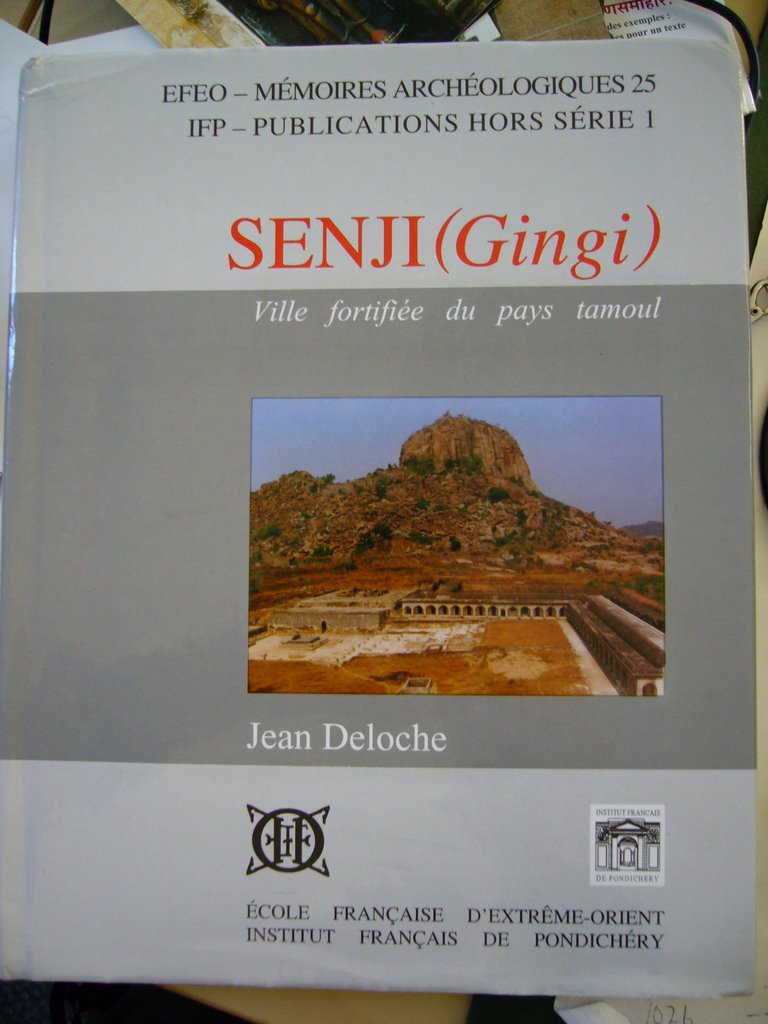
Kṛṣṇagiri built on a hill that rises out of the plain like a huge termite mound. A massive (elephant-proof) rampart connects it to the main attraction: Rājagiri, a spectacular fortress built upon a towering granite monolith to the South West (see the cover photo on Deloche’s book above). Another vast rampart crosses the plain and impossibly rises up the steep slopes to join Candrāyaṇadurga, which as its name indicates is shaped like a lunar crescent. A lesser wall (though still incredible to see) crosses the valley strewn with granite boulders to join Rājagiri. Within this triangle lies what Deloche calls the “internal fort,” while the ancient city lay on the plains just West of Candrāyaṇadurga. Numerous temples are dotted about the site.
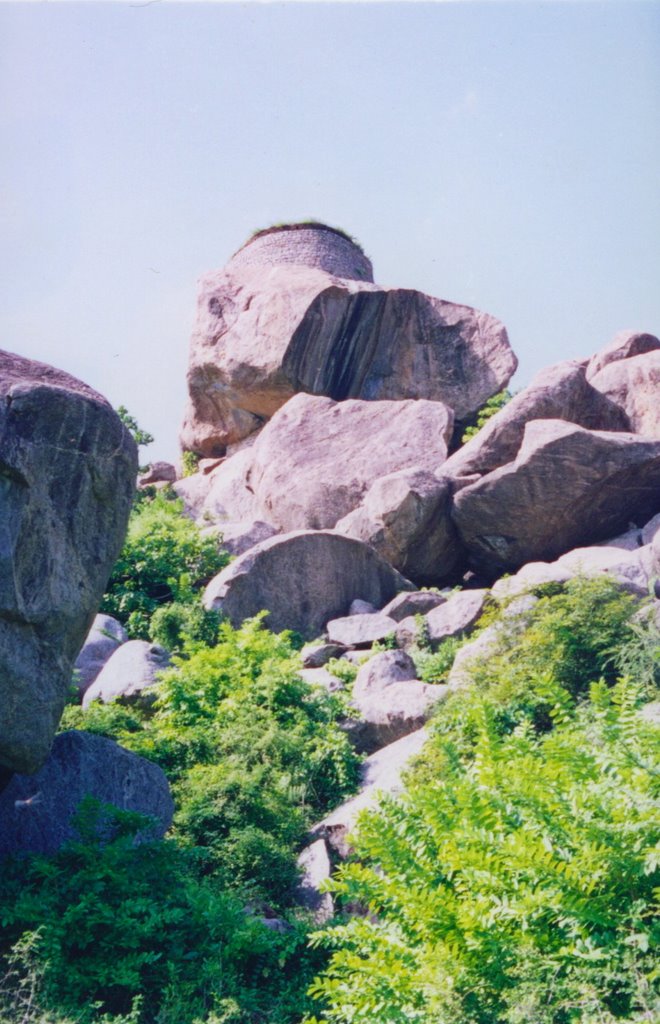
This is a gun placement near Kuraṅgudurga if I remember right. Incidentally, one of the first useful dating tools I learnt from Jean Deloche is that rounded fortifications generally post-date the introduction of firearms to India, square towers and sharply angled fortifications predate it.

It is prudent to avoid
Rājagiri and Kṛṣṇagiri on weekends. While it is easy enough to escape any given throng of jeering tourists (just walk briskly up hill for a few minutes), the problem is that one inevitably just bumps into the next one. In any case, there is now a hefty entry charge for Rājagiri, so repeated visits are to be avoided.
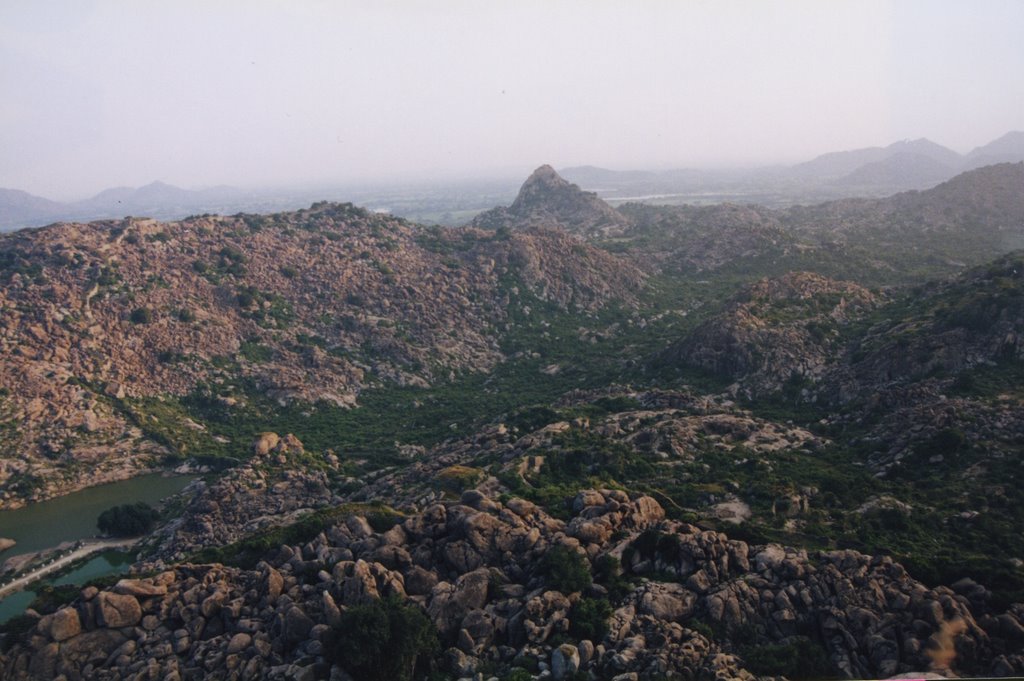
This picture shows the view from the top of Rājagiri, looking towards Kusumalai, (the tooth-shaped peak on the horizon), the water in the left of the picture is Chettikulam.

Candrāyaṇadurga is virtually untouched by the ASI but there is no convenient access, I usually made my way across the boulder field South of Chettikulam (because that lies in shadow in the morning) and then enjoyed the taxing climb up to its lowest ramparts to one of the small gateways.

There are two more fortifications on high points beyond the main triangle: Kuraṅgudurga and Kusumalai. This post is about Kusumalai, the furthestmost fortification of the site.

This snippet of Deloche’s excellent map shows the topography surrounding Kusumalai. There are a number of ways to reach this site, the most enjoyable is as follows.

Make sure you bring a few litres of water and have adequate footwear. It is inevitable that the thorny plants will destroy your clothing, so wear something dispensable. Avoiding the main entrance to the internal fort, go straight to
Chettikulam. Make for the large tree beside the Āñjaneya temple (beware the gang of mischievous monkeys) and pass through the remains of the “Devils Gate”.

There is a dirt track used by goat herders that leads to the small Śiva temple. You do not want to go that far along it, though. Shortly after you reach the
Nadumandapa leave the track heading due South. This may be painful for the first few yards if the thorn bushes are dense, it gets easier later on. Head for what looks like a giant wave of rock and then try to find a way up it (some climbing skills are needed). This eventually brings you up on to a granite plateau strewn with huge boulders, a very agreeable place to just spend some time, the stillness and natural beauty are quite amazing. The bouldering enthusiast can spend many happy afternoons climbing these rocks. Just to the east of this plateau lies the pond called Allikulam.


If it is very hot this is a good place to doze beneath some rocks. There are a few undocumented rock paintings of lizards etc. here, I only spotted them by accident after more than a year of regular visits, so well concealed are they.
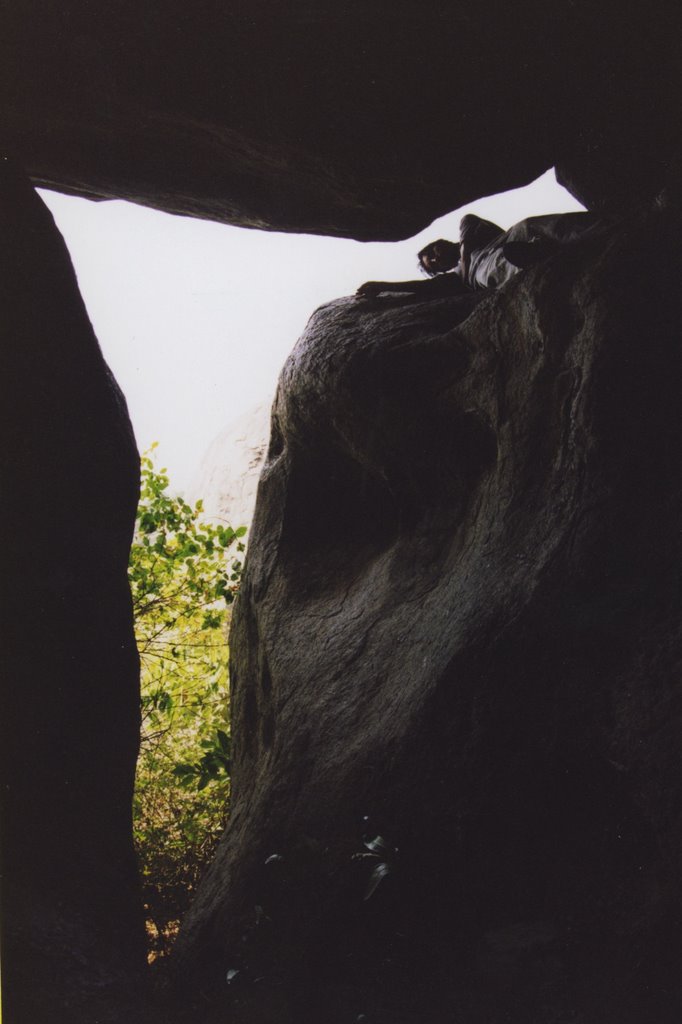
A pleasant place for a rest.

Though Kusumalai seems close from here it is probably a good one hour climb to the top even if you know the way. Needless to say there are no “paths” any more. Here I can improve on Deloche’s map. Just to the North of the round bastion in the centre of his map runs a well concealed flight of “steps” carved into the acutely sloping wall of granite. The reason he never spotted them (and neither did I at first) is twofold. Firstly, the lower half is overgrown with thorny creepers, secondly they seem to have been ingeniously carved so as to be invisible from below. I only saw them after climbing over the northern walls rising from the cliff of the north-western outcrop and then making my way along the parapet.

Such suicidal tactics are not called for, simply try to make your way either over the boulders or else through the caverns below them to a spot beneath the rounded bastion, then start climbing the monolithic rock. After a few yards the steps will suddenly become visible. These lead to a small door ( a sketch of this is (d) on p.55 of Deloche). Beside it is a relief of
Hanumān set into the wall (also not documented by Deloche, it only stands out when the light is right). If you have no water left by this stage, return immediately. Otherwise proceed into the remains of the fort and head for the citadel.

Incidentally, there is another small door not noted in Deloche's maps and sketches. This is in the stonework to the north-west (see picture). I found no traces of paths leading to this entrance.

Deloche’s map does not indicate this, but there are remains of circular stonework on the very top of Kusumalai. My hand is to the left of this image, giving the scale. The stonework is visible on top.

The serious Sanskritist will naturally seek to arrive armed with insights gleaned from suitably obscure texts. Senji is supposed to be just about the only South Indian site with more or less intact fortifications, so it is a veritable treasure trove for “mere textualists with antiquarian interests (c).” After reading through the Arthaśāstra section on fortresses for an overview, the specific text to read is the little known Sāṃrājyalakṣmīpīṭhikā (attrib. Ākāśabhairavakalpa) “The Emperor’s Manual,” ed. M. Sadasivam, Tanjore Saraswathi Mahal Series No. 58, Thanjavur 1990. More about this in a subsequent post.

View of Rājagiri from the top of Kusumalai.

Deloche, Jean: Senji (Gingi), ville fortifiée du pays tamoul, Paris / Pondichéry, EFEO (Mémoires archéologiques, 25) / IFP, 2000.

Reviewed: School of Oriental and African Studies.Bulletin Vol. LXIV, Part 3, 2001, By George Michell p. 426

Tuesday, April 4, 2006

Sāhib Kaul's Śyāmāpaddhati

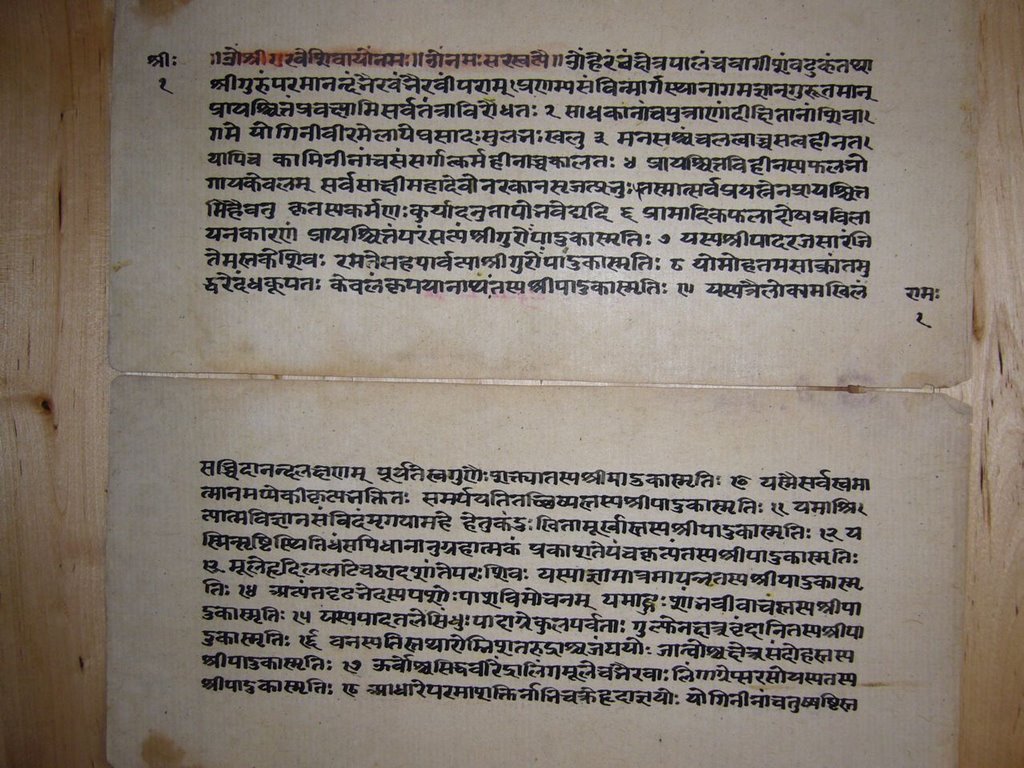
I have in my possession a valuable manuscript (from Rajasthan) of a Śyāmāpaddhatiḥ (or maybe Nityapūjāpaddhatiḥ)purporting to be the work of the Kashmirian author Sāhib Kaul (alias Ānandanātha, born in 1629 AD) or of a disciple of his. Since I have not yet been able to find another copy of this text (it seems curiously missing in Kashmir itself) I will post photographs and a transcription of this interesting ritual manual here. Click for more...

The colophon is not unambiguous: iti nityapūjāpaddhatiḥ / śubham astu lekhakapāṭhakayoḥ mahāmāheśvarācāryavaryacaryāviśrutaiḥ śrīmatSāhibaKaulākhye sthitimadbhih Parāśrame śrīMitrānandanāthāya svātmajāya vinirmitā śrīŚyāmāpaddhatis tulyā śrīvidyāpaddhatikramaiḥ saṃpūrṇā pūrṇakāmānāṃ manoramā sadānandamahānujñā citprakāśayaśapradā //

For more detail about Sāhib Kaul see: Devīnāmavilāsa by Sāhib Kaul, KSTS, Lahore 1942. [reprinted by Navrang , Delhi 1989].

Hanneder, Jürgen (2001) “Sahib Kaul´s Presentation of Pratyabhijna philosophy in his Devinamavilasa”. In: Le Parole e i Marmi. Studi in onore di Raniero Gnoli nel suo 70 compleanno, ed. R. Torella, Serie Orientale Roma XCII, 1/2 , Roma 2001, p. 399–418.

K. Potter: Anandanatha (Sahib K.) (1750) - 1385

\fol{1\verso}oṃ śrīgurave śivāyoṃ namaḥ // oṃ namaḥ sarasvatyai //

KāArPa_1ab: oṃ heraṃbaṃ kṣetrapālaṃ ca & vāgīśaṃ baṭukaṃ tathā
1cd: śrīguruṃ paramānandaṃ & bhairavaṃ bhairavīṃ parām
2ab: praṇamya saṃvinmārgasthān & āgamajñān gurūtamān
2cd: prāyaścittaṃ pravakṣyāmi & sarvatantrāvirodhataḥ
3ab: sādhakānāṃ ca putrāṇāṃ & dikṣitānāṃ śivāgame
3cd: yoginīvīramelāpe & prasādaḥ sulabhaḥ khalu
4ab: manasaś cañcalatvāc ca & sattvahīnatayāpi ca
4cd: kāminīnāṃ ca saṃsargāt & karmahīnāc ca kālataḥ
5ab: prāyaścittavihīnasya & phalabhogāya kevalam
5cd: sarvasākṣīmahādevo & narakān asṛjat prabhuḥ
6ab: tasmāt sarvaprayatnena & prāyaścittam ihaiva tu
6cd: kṛtasya karmaṇaḥ kuryād & anutāpo bhaved yadi
7ab: prāmādikaphalādoṣa&pravilāyanakāraṇam
7cd: prāyaścittaṃ paraṃ satyaṃ & śrīguroḥ pādukāsmṛtiḥ
8ab: yasya śrīpādarajasā & rañjite mastake śivaḥ
8cd: ramate saha pārvatyā & śrīguroḥ pādukāsmṛitiḥ
9ab: yo mohatamasākrāntam & uddhared andhakūpataḥ
9cd: kevalaṃ kṛpayā nāthaḥ & tasya śrīpādukāsmṛtiḥ
10ab: yasya trailokyam akhilaṃ &\fol{2\recto} saccidānandalakṣaṇam
10cd: pūryate svaguruṇaih śaktyā & tasya śrīpādukāsmṛtiḥ
11ab: yasmai sarvasvam ātmānam & apy ekīkṛtya bhaktitaḥ
11cd: samarpayati tacchiṣyas & & tasya śrīpādukāsmṛtiḥ
12ab: yam āśrityātmavijñāna&saṃvidaṃ mṛgayāmahe
12cd: hetukaṃ duḥkhitā mūrkhās & tasya śrīpādukāsmṛtiḥ
13ab: yasmin sṛṣṭisthitidhvaṃsa&pidhānānugrahātmakam
13cd: prakāśate pañcakṛtyaṃ & tasya śrīpādukāsmṛtiḥ
14ab: mūle hṛdi lalāṭe ca & dvādaśānte parah śivaḥ
14cd: yasyājñāmātram †āpanna† & tasya śrīpādukāsmṛtiḥ
15ab: atyantadṛḍhabhedasya & paśoḥ pāśavimocanam
15cd: yam āhuḥ śāṃbhavī vācas & tasya śrīpādukāsmṛtiḥ
16ab: yasya pādatale sindhuh & pādāgre kulaparvatāḥ
16cd: gulphe nakṣatravṛndāni & tasya śrīpādukāsmṛtiḥ
17ab: vanaspatis tathā romni & śatarudrāś ca jaṅghayoḥ
17cd: jānvoś ca kṣetrasandohas & tasya śrīpādukāsmṛtiḥ
18ab: ūrvoś ca siddhavīrendrā & liṅgamūle ca bhairavaḥ
18cd: liṅgāgre ’psaraso yasya & tasya śrīpādukāsmṛtiḥ
19ab: ādhāre paramā śaktir & nābhicakre hrdājñayoḥ
19cd: yoginīnāṃ catuḥṣaṣṭis & ta\fol{2\verso}sya śrīpādukāsmṛtiḥ

More of this soon.

Saturday, April 1, 2006

Wednesday, March 29, 2006

ॐ स्वस्ति वलभीतः

Since I have just posted a copperplate by Bhojadeva I may as well post my transcript of a “Valabhī” copperplate grant by the Maitraka king Śīlāditya II. This I saw also with Sam Fogg in London. It measured 280 by 355 mm and consisted of 2 separate copper-plates inscribed on both sides with two holes for binding. Through one of these would originally have passed the oval Bull-seal of the Maitrakas, (For an example of this, see Epigraphia Indica XV p. 256 etc.) Its elegant courtly Sanskrit prose and verse is written in what is sometimes called the Gupta-Valabhī script, and it was dated to 681 AD. I have no idea where this edict went after it left Sam Fogg, so there is a chance it may reappear on the market eventually. Again I have no decent photograph. Click below for more...

The first “Valabhī” grants were found in the 1870s, as work on a water-tank in Palitānā, India, led to the discovery of a concealed, underground (treasure?) chamber. The common designation “Valabhī” edicts arose because most of them begin with the formula: oṃ svasti valabhītaḥ, “Oṃ Hail! Issued from Valabhī…” The few that do not bear this inital phrase were issued by the same kings but from temporary military camps during campaigns of conquest. After this initial discovery a handful of other Valabhī documents have come to light, usually in similarly poorly documented circumstances. Despite this, they afford us an invaluable and unexpected glimpse into the life and times of the late Gupta empire, detailing the affairs of the Śaiva Maitraka dynasty of Saurāṣṭra. As is common for such documents the plates open with a dynastic eulogy. The Maitrakas, we are told, are descended from a certain Bhaṭakka or Bhaṭārka who was triumphant in countless wars. Bhaṭakka is designated merely as a “general” (senāpati). The only great power he could have served at that time was the expanding Gupta empire. His son Dharasena I also is styled merely “general” (EI xi:106 line 6: senāpatiDharasenaḥ…) and only his son Droṇasiṃha is finally accorded the title of sovereign king.

The present edict was issued by a Maitraka king calling himself Śīlāditya (“Sun of Righteous Conduct”) in the 362nd year of the Gupta-Valabhī era which began in 319 A.D., e.g. in 681 A.D. It clearly bears his labelled signature at the end: svahasto [']yam mama, “This is my own hand!” Now, we know of at least seven Maitraka kings bearing this name, so the following table of the first seventeen Valabhī kings, based on Bühler's compilation of dates and names (IA V:208), may serve to identify him more precisely:


Following the genealogy given in the present plates the king in question is Śīlāditya II, the fifteenth ruler of Valabhī in succession to Bhaṭārka, and the son of the brother of the previous king Kharagraha II (“Chastiser of the Wicked”) alias Dharmāditya (“Sun of the Law”). Like the one other known copperplate of this king it was issued from a temporary military base (vijayaskandha, “camp of victory”) during a campaign. This is in itself rather significant, for it shows that Śīlāditya II may have ruled in rather troubled times.

Line 18 gives the king's name and at the end we read the date: dūtako <'>tra pramātṛśrīViṣṇubhaṭalikhitaṃ [midaṃ sandhivigrahādhikṛta]divirapatiśrīmadAnahileneti saṃ 300 +60(?) + 2 āśvayuja ba 3 svahasto mama /// The envoy in this matter is Viṣṇubhaṭa, it was written by the master scribe Anahila in the year 362, there then follows the king's signature.

Scribal peculiarites: Ba and va and sa and śa are often not distinguished, vocalic ṛ and ri are confused (tṛ for tri), unnecessary anusvāras sometimes precede initial m, consonants are doubled after medial -r-, visarga before initial s can be omitted.

This transcript of the first side of plate A I made from the uncleaned original plate:

1: ◯ svasti [vijayaskandhāpāra] ... [prasabhaṃ praṇatāmitrāṇāṃ maitrakāṇām atulabalas] sa<ṃ>pannamaṇḍalābhogasaṃsaktaprahāraśatalabdhaprajā[pi] tatpra-

2: [*jāpopanatadānamānārjjavopārjjitānurāgo]... balāvāptarājyaśriyaḥ paramamāheśvaraḥ śrīBhaṭṭārkād avyavachinnarājyavaṅśā-

3: [n mātṛpitṛccaraṇāravinda]praṇatipravidhautāśeṣaka[lma]ṣaḥ [śai]ṣavāt prabhṛti khaḍgadvitīyabāhur eva samadaparagajāghaṭasphoṭanaprakāśitasatvani-

4: kaṣas... saṃhatiḥ sakalasmritipraṇītamārggasamyakparipālanaprajāhṛdayarañjanānvarttha-

5: [rājaśabdo rūpakāntisthairyyabuddhisaṃpadbhiḥ smara]śasāṅkādrirājodadhitṛdasagurūdhaneśan atiśayānaḥ śaraṇāgatābhayapradānaparatayā

6: tṛṇa[vad apāstā]śeṣasvakā[r]yyaphalaḥ prārttha[nā]dhikārtthapradānānanditavidvatsuhṛ<t>praṇayihṛdayaḥ pādacārīva sakalabhuvanamaṇḍalābhogapramo-

7: daḥ paramamāheśvaraḥ śrīGuhasenas tasya sutas tatpādanakhamayūkhasantānavisritaJāhnavījalaughaprakṣālitāśeṣakalmaṣaḥ praṇayiśatasahasro-

8: pajīvyamānasa[mpa]drūpalobhād ivāsritaḥ sarabhasam ābhigamikaiḥ guṇai<ḥ> sahajaśaktiśikṣāviśeṣavismāpi<tā>khiladhanu<r>dharaḥ prathamanarapatisamatisri-

9: ṣṭānām anupālayitā dharmmadāyānām apākarttā prajopaghātakāriṇ<ā>m upaplavānāḥ ÎrīśaitaÎ{The Palitānā copperplate of Śīlāditya I (EI xi:117 line 12) reads: upaplavānāṃ darśayitā.} śrīS{v arasvatyor ekādhivāsasya sa<ṃ>hatārābhi\footnote{em: °ārāti°}.}pakṣalakṣmīpari-

10: bhogadakṣavikramo vikramopasaṃprāptavimalapārtthivaśrīḥ paramamāheśvaraḥ śrīDharasenas tasya sutas tatpādānuddhyāta<ḥ> sakalajagadānandanātyadbhutaguṇasa-

11: mudayasthagitasamagra[diṅma]ṇḍalaḥ samapā[ga]ta{The Palitānā copperplate of Śīlāditya I (EI xi:117) reads: °samaraśata°}.}vijaya[śo]bhāsanātthamaṇḍalāgradyutibhānura\footnote{The Palitānā copperplate of Śīlāditya I (EI xi:117 line 12) reads: °bhāsura°}.}tarā[ṃsu]pīṭhodūḍhagurumanoratthamahābhāraḥ sarvvavidyāparā-

12: ** vibhāgārigamavimala<mat>ir api sarvvata<ḥ> subhāṣitalavenāpi sukhopapādanīyaḥ paritoṣasa[mma?]gralokāgādhagāmbhīryyahridayo pi succaritāti-

13: [śaya]suvyaktaparamakalyāṇasvabhāvaḥ khilībhūtakritayuganṛpatipatthavisodhanādhigatodagrakīrtti<r> dharmmānuparodhojvalatīrīkṛitārtthasukhasamyad{em: °sampad°}.upa-

14: sevānirūḍhaDharmādityadvitīyanāmā paramamāheśvaraḥ śrīŚīlādityas tasyānuja<ḥ> tatpādānudhyāta<ḥ> svayam Upendragurūṇeva guruṇātyadaravatā samabhi-

15: laṣaṇīyām api rājalakṣmī[ṃ] skandhāsaktāṃ paramabhadraiva dhuryyas [ta]dājñāsam[p]ādanaikarasatayaivodvahantīda{em: °khedasukha°}khedasukharatibhyāṃm anāyāsitasatvasaṃpatti<ḥ>

16: prabhāvasampa<d>vaśīkṛitanṛ[pati]śataśiroratnacchāyopagūḍhapādapīṭho <'>pi parāvajñābhimānarasānoliṅgitamunovṛrttiḥ praṇatim ekā<ṃ> parityajya pra-

17: khyātapauruṣābhimānai<r>{v} apy a[rā]tibhir a{k}nāsāditapantibhiyopiyakila{\vl: pratikriyopāyaḥ kṛta°} khilabhuvanāmodavimalagu{m}<ṇ>asa<ṃ>hati<ḥ> prasaṃmyasa bhuta\footnote{em: prasabhavighaṭita°.}}sakalakalivi-

18: lasitagatinnīnū[ḍ]ānādhi iharohibhir\footnote{em: °nīcajanādhirohibhir}.} aśeṣai[r] ddoṣair annā[sp]ṛṣṭ<ā>tyunnatahṛda{n}<yaḥ> prakhyātapaurusāstrakauśalābhimāna<ḥ> gaṇatitthavipakṣakṣiti-

19: patilakṣmīsvaya[ṃ]grahaprakāśi<ta>pravīrapuruṣaprathamasaṃkhyādhigama<ḥ> paramamāheśvaraḥ śrīKharagrahas tasya{s} tanayas tatpādānudhyāta<ḥ> sakalavidyādhigama-

20: vihita[ma?]nikhilavidvañjanamanaḥparitoṣotiśayaḥ satvasampadā tyāgaudāsyeṇa{em: audāryeṇa} ca vigatānusandhānāsamāhitārātipakṣamanoratho <'>kṣabhaṅgaḥ

21: samyagupalakṣitānekaśāstrakalālokacaritagahvaravibāto <'>pi paramabhadraprakṛtipi{em: °prakṛtir akṛtrima°}kṛtrimap<r>aśra<ṃ>yavinayaśobhāvibh[ū]ṣaṇasamara{g}<ś>atajayapa-

22: tākāharaṇapratyalodyagrabāhudaṇḍavidhvansitanikhilaprat[i]pakṣadarppodayaḥ svadhan[u]ḥprabhāvaparibhūtāstrakauśalābhimānaśakalāratimaṇḍalābhi-

23: naṃdi[taśāsa]naḥ paramamāheśvaraḥ śrīDharasenas tasyānuja<s> tatpādānudhyātaḥ saccaritātiśayinasakalapūrvvanarapatir atidu<ḥ>sādhanām api

24: prasādhānāviṣayā{j}<ṇ>ā<ṃ> mūrttiman iva puruṣakāraḥ parivi<d>dhaguṇānurāganibhūracintadhṛtivi manur iva svayam abhyupapannaḥ prakṛtibhir adhigata-

25: kalākalāpaḥ kāntimān [nivyati]hetur akalaṃkakumudanātharajyapratāpasthagitadigantarāgapradhvansitadhvāntarāśisaśatoditasevitā prakṛtibhyaḥ paraṃ

26: pratyayam artthavantam atibahutithaprayojanānubandhanāgamaparipūrṇṇā[ṃ] vidadhānaḥ sandhivigrahasamāsaniścayanipuṇaḥ sthāne <'>nurūpa{p}<m> ādeśa<ṃ> dadya-

27: dguṇavidhividhānajanitasaṃskārasukhatā rājyaśālāpuriyāṃn[t]urupayor{em: sūtrayor ubhayor.} api niṣṇataḥ prakoṣtavikramo vikaruṇāmṛduhṛdayaḥ

28: ś<r>utavān apy agarvvitaḥ kānto <'pi> prasamī sthira{yo}<sau>hṛdayo <'>pi n[i]rasitā dosavatām udayasamayasamupajanitajanatānurāgaparivihita-

29: bhuvanasamakṣitaprathitaBālādityadvitīyasamāna[ḥ] paramamāheśvaraḥ śrīDhruvasenas tasya suta<s> tatpādakamalapraṇāmadharaṇīkaṣaṇajanita-

Sunday, March 26, 2006

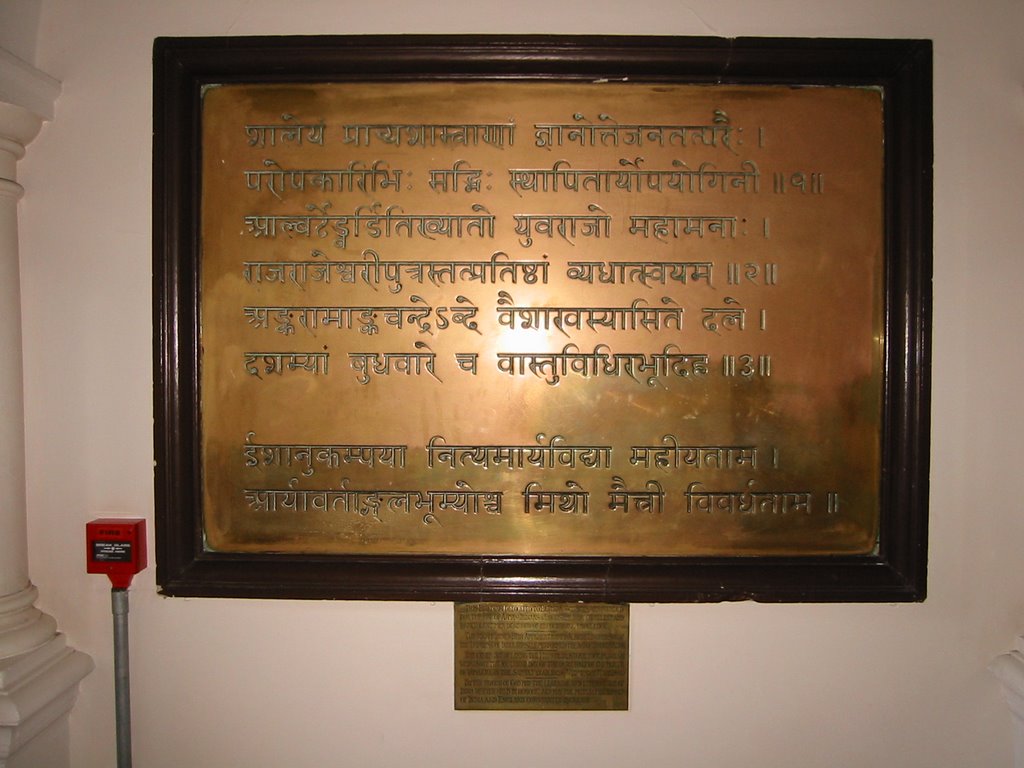
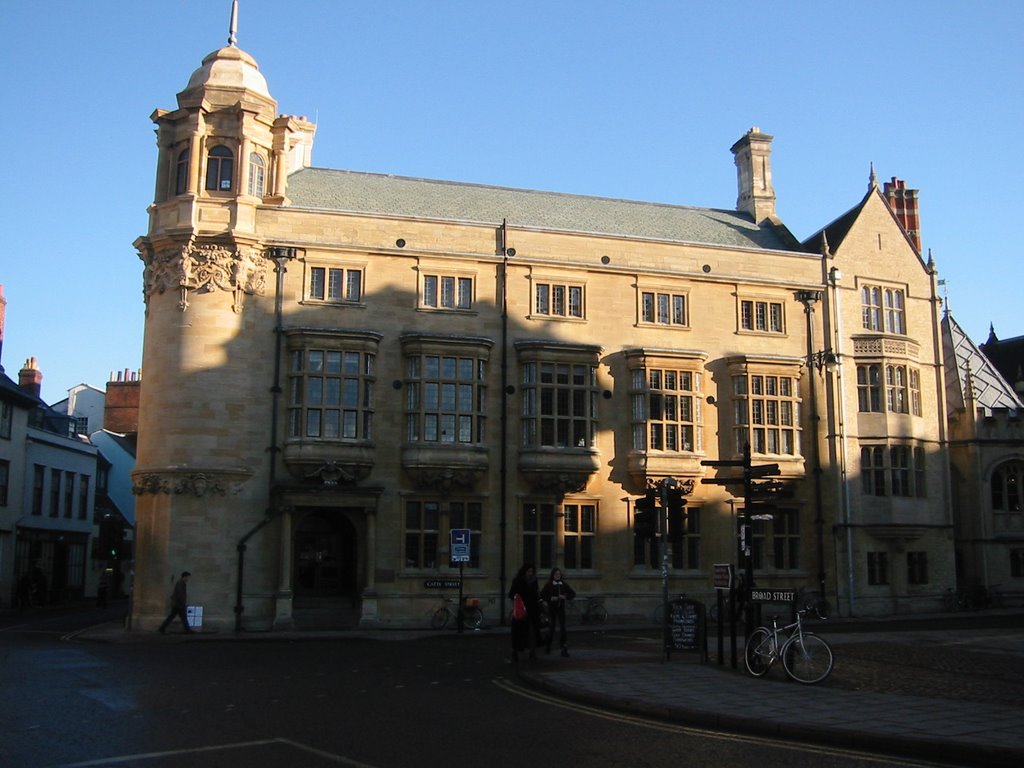
The Oxford Sanskrit Inscription

The old Indian institute building of the Bodleian Library in Oxford on the corner of Catte street and Holywell street boasts a brass plaque with a Sanskrit inscription. The well situated building now houses the History faculty, proving that all such pious wishes are only of the moment.


Friday, March 24, 2006

Pāśupatācāryo Vidyācakravartī of Ujjain

Since this seems to have even escaped at least one specialist of the Pāśupata religion, I post here a partly emended transcript of a copperplate inscription by the Paramāra sovereign Bhojadeva (1004–60 AD) that I happened to see with Sam Fogg Rare Books and Manuscripts a few years back. No, this is not a bad joke, there really was a genuine praśasti by the celebrated patron of Sanskrit poets Bhojadeva for sale in London. The plate measured 305 by 202 mm and had two holes for binding. Originally, there must have been a second plate attached by rings to the present plate. This would have contained the date, an engraved facsimile of Bhojadeva's handsome signature, and the royal seal of Garuḍa mauling a hooded cobra. Needless to say, I handled it with some awe. I never succeeded in making a legible photograph, but I believe the copperplate was sold to a Museum (in Baltimore ?)


Like other copperplates issued by Bhojadeva this plate gives the lineage of the Paramāra's back to Harṣadeva alias Sīyaka II (=Siṃhaka). The succession is: [1.] Harṣadeva (alias Sīyaka II), [2.] Vākpatirājadeva, [3.] Sindhurājadeva [4.] Bhojadeva. That Harṣadeva must indeed be none other than Sīyaka II is established also by the Paramāra court poet Padmagupta (alias Parimala) in his elaborate eulogy of his patron in the Navasāhasāṅkacarita.


Although Paramāras ruled from their capital city of Dhārā, it is supposed that they originally had their court in Avanti or in the ancient and wealthy city of Ujjain, which they appear to have visited regularly. This copperplate grant is in fact issued in Ujjain. One plausible reason I have seen adduced to explain this supposed transfer of the capital city is the proximity of the factitious Solanki dynasty in neighbouring Aṇahilavāḍa.


The present inscription mentions by name a Pāśupata preceptor dateable to the reign of Bhojadeva: Vidyācakravartin. Bhojadeva makes his land grants with his express “permission”! (…pāsupatācāryya[bha-]ṭṭārakaśrīvidyācakravarttinām anuj[ñ?]ayā…)


As is customary, the edict begins with homages to
Śiva in his manifestation as Vyomakeśa, the tutelary deity of the Paramāra's state religion.


“Oṃ Hail! Triumphant is
Vyomakeśa, who, for the welfare of his creation, bears on his head the lunar crest, [curving] as though it were the sprout from which sprung the universe. May the matted locks of the enemy of Cupid, tawny like writhing lightning in the dread sky at the end of the world, ever grant you favours. The sovereign monarch, King over kings, paramount lord, the illustrious Bhojadeva, in good health, the successor to the sovereign monarch, King over kings, paramount lord, Sindhurājadeva, the successor to the sovereign monarch, King over kings, paramount lord, Vākpatirājadeva, the successor to the sovereign monarch, King over kings, paramount lord, Harṣadeva…”


Bhojadeva then addresses all of his officials, and states that he has arrived in Ujjain from his capital Dhārā. He introduces the substance of the grant with graceful language as follows:


“After paying homage to [
Śiva] the husband of Bhavānī, the Lord of all that moves and all that moves not, and realising that worldly existence is without essence, and that this [my] sovereignty over the world is as uncertain as clouds blowing in the wind, that the enjoyment of sensory objects endures but for a flash, that for humans the vital breaths are as uncertain as a drop of water on the tip of a blade of grass,—Alas! my friends, Dharma is the best aid on the journey to the next world. Fortune is like the felly of the wheel of becoming, those who gain it and do not donate it in charity reap a reward of deep regret.”


As an aside, it is amusing that Mammaṭa censures the form bhavānīpati on the grounds that the pratyaya ṅīṣ already adds the sense “wife of Bhava (=Śiva)”: Kāvyaprakāśa 7.50–51: …atra bhavānīpatiśabdo bhavānyāḥ patyantare pratītiṃ karoti / indravaruṇabhavetyādinā puṃyogān ṅīṣpratyayena bhavasya patnī bhavānī /. The result is that it evokes a repugnant possible meaning: “lover of Śiva’s wife (but not Śiva himself!)”.


1: [oṃ] svasti ja[yati] vyomakeso [']sau yaḥ sarggāya bibhartti tāṃ [aiṃdavīṃ] śirasā lesā[ṃ] (em: lekhāṃ) jaga[-]
2: db[ī]ajāṃkurāk[ṛ]t[iṃ /1/ tanvaṃt]u vaḥ smarāteḥ (em: smarārāteḥ) kalyāṇam anisaṃ jaṭāḥ / kalpā[ṃ]tasamayoddāmavyomataḍidvalapapi[-] (em: °valaya°)
3: ṅgalāḥ /2/ paramabhaṭṭārakamahārājādhirājaparamesvarasriharṣadevapādānudhyātaparamabhaṭṭā[-]
4: rakamahārājādhirājaparamesvaraśrivākpatirājādevapādānudhyātaparamabhaṭṭārakamahārā-
5: jādhirājaparamesvaraśrīsiṃdhurājadevapādānudhyātaparamabhaṭṭārakamahārājādhirājaparame-
6: [svara]śrībhojadevaḥ kuśalī śrīmadujjayanyuttarapathake [?]ḍakheṭakacaturāsītau makaralāyagrāme
7: ta**[pa]liyāgrāme [']grasyā eva pūrvvapathake ra{}uṇījīgrāme samupagatān samastarājapu mupra (em: °rājapuruṣa°)
8: pra[tinivāsipa]ṭṭakilajanapadādiṃsca bodhayaty astu vaḥ saṃviditaṃ / yathā śrimaddhārā[t]aḥ śrīmadujjayanyā[ṃ] samāga[-]
9: tair asm[ābhiś ca]rācaragukaṃ (em: °guruṃ) bhagavantaṃ bhavānīpatim abhyartha (em: abhyarcya) saṃsārasyāsāratāṃ dṛṣṭvā tathā hi vātābhravibhramam idaṃ va[-]
10: sudhādhipatyam āpātamadhuro viṣayopabhogaḥ / prāṇās tṛṇāgrajalabiṃdusamā narāṇāṃ dharmmaḥ sakhā [param aho] pa[-]
11: ralokayāne / bhramatsaṃsāracakrāgradhārādharām imāṃ śriyaṃ / prāpya ye na dadus teṣāṃ paścāttapaḥ (em: paścāttāpaḥ) para[ṃ pha]laṃ / iti
12: jagato vinasvara[ṃ] svarūpam ākalayyādṛṣṭaphalam aṃgīkṛtyoparilikhitamakar[a/e]lāyagrāmaṃ s[v]asīmātṛṇakāṣṭhayūtigocarapa[-]
13: ryaṃttasavṛkṣamālākulaḥ sahiraṇyabhāgabhogoparikarasarvvādāyasametaś ca devabrāhmaṇabhuktivarjaṃ pāsupatācāryya[bha-]
14: ṭṭārakaśrīvidyācakravarttinām anuj[ñ?]ayā deva[śr]ī-iṃdresvarāya tathā ghaghaliyāgrāmīyahalacatuṣṭayaṃ gṛhasthānasa[metaṃ] d[e]va[śrī-]
15: brahmesvarāya tathā raüṇījīgrāmīyahalapaṃcakaṃ gṛhasthānasametaṃ devaśrī iṃdresvarasatkajaga[tnī]sarasvat[oroharadgrā]mīya ((or: jagattīsarasvataurāharadgrāmīya))

16: halapaṃcakaṃ gṛhasthānasametaṃ devaśrī[kaṃtha]ḍesvarāya [terthatadgrāma]halapaṃcakaṃ gṛhasthānasametaṃ devaśrīsuvalla[ṃ?]-

17: svurāya
((or: khurāya?)) tathā śrī ujjayanīma[ḍadhikādāyātu] / śrī-iṃdresvaradevāya [a]ṃgabhogārtha[ṃ] [?]lakārthaṃ tathā devaśrībrahme


Notes:
bhoga = district. A hala is an extent of arable land that can be ploughed with one set of oxen.


सूक्ष्मध्यानम् ॥ (sūkṣmadhyānam) Part 3

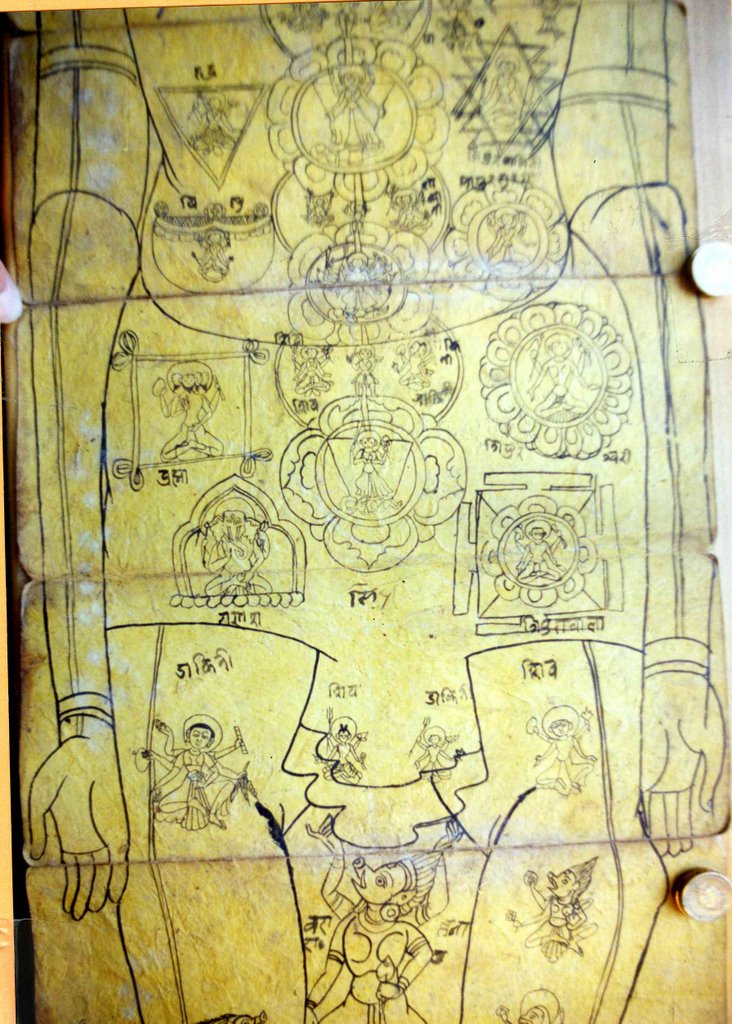
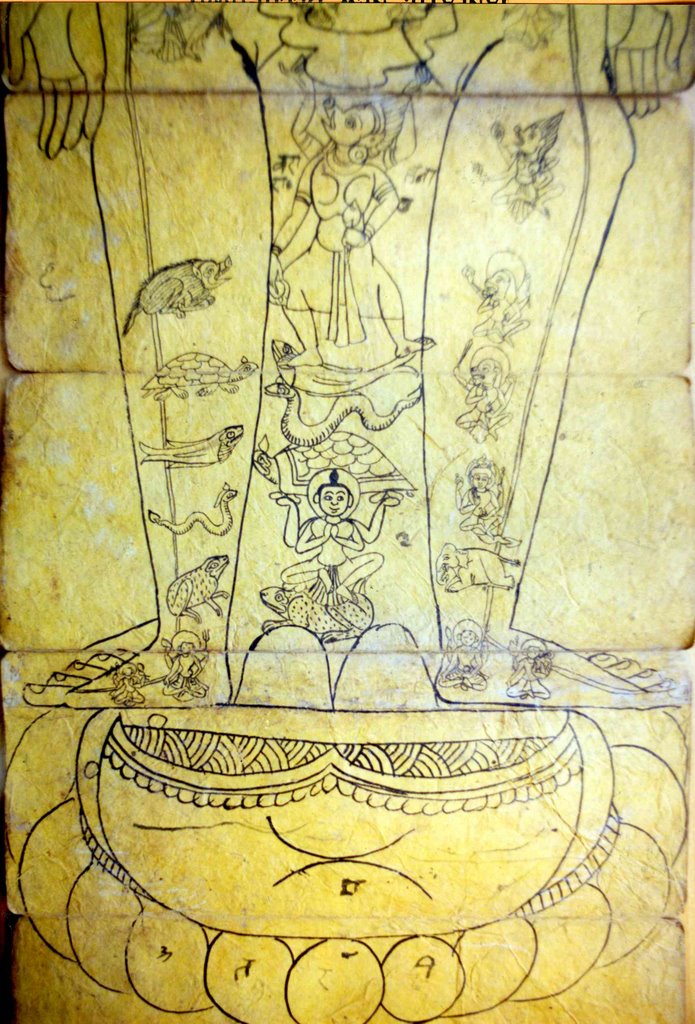
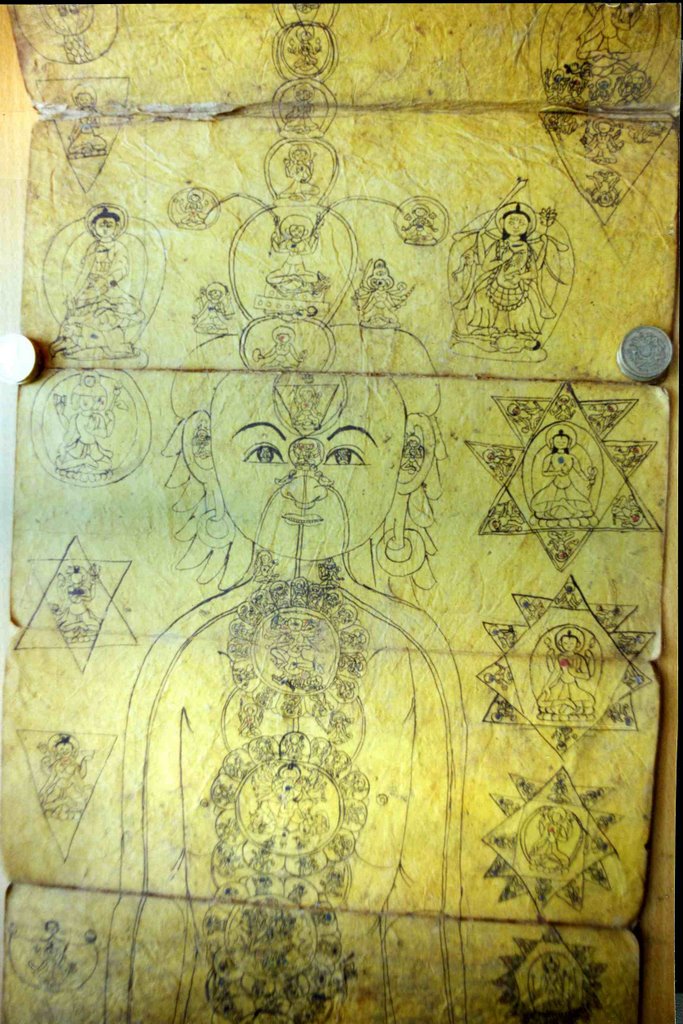
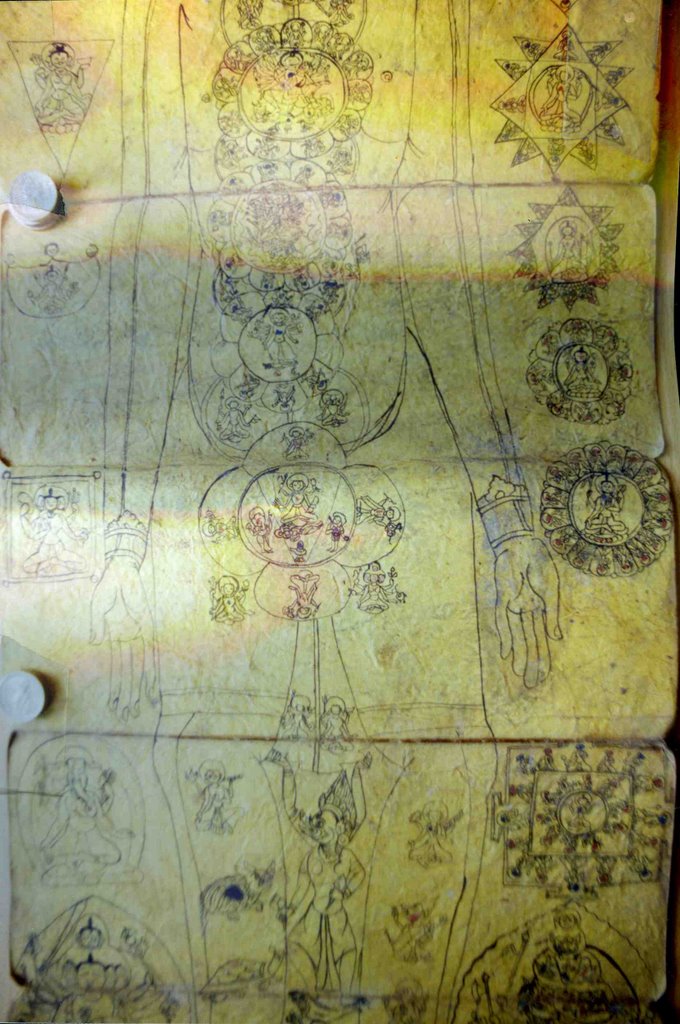
This is a fairly elaborate cakra scroll from Kashmir with a Sanskrit text in Śāradā script detailing the illustrated program. I saw it in London with an art dealer (present location unknown). See the rest of the scroll here. There seem to be quite a few very similar Kashmirian scrolls in existence, one excellent example is preserved in the Victoria and Albert Museum, London. The catalogue entry is presumably the work of someone unfamiliar with the Śāradā script, otherwise the identifications would be clearer (Victoria and Albert Museum IS 8­1987 ­ 21/D8­E4, IS 8­1987 (1/9) ­ 21/D8, IS 8­1987 (2/9) ­ 21/D9, IS 8­1987 (3/9) ­ 21/D10, IS 8­1987 (4/9) ­ 21/D11, IS 8­1987 (5/9) ­ 21/D12, IS 8­1987 (6/9) ­ 21/E1, IS 8­1987 (7/9) ­ 21/E2, IS 8­1987 (8/9) ­ 21/E3, IS 8­1987 (9/9) ­ 21/E4. “Scroll depicting the chakras, or centres of psychic energy, Ink, opaque watercolour, gold and silver on paper, Probably Kashmir, 19th century”.).

Wednesday, March 22, 2006

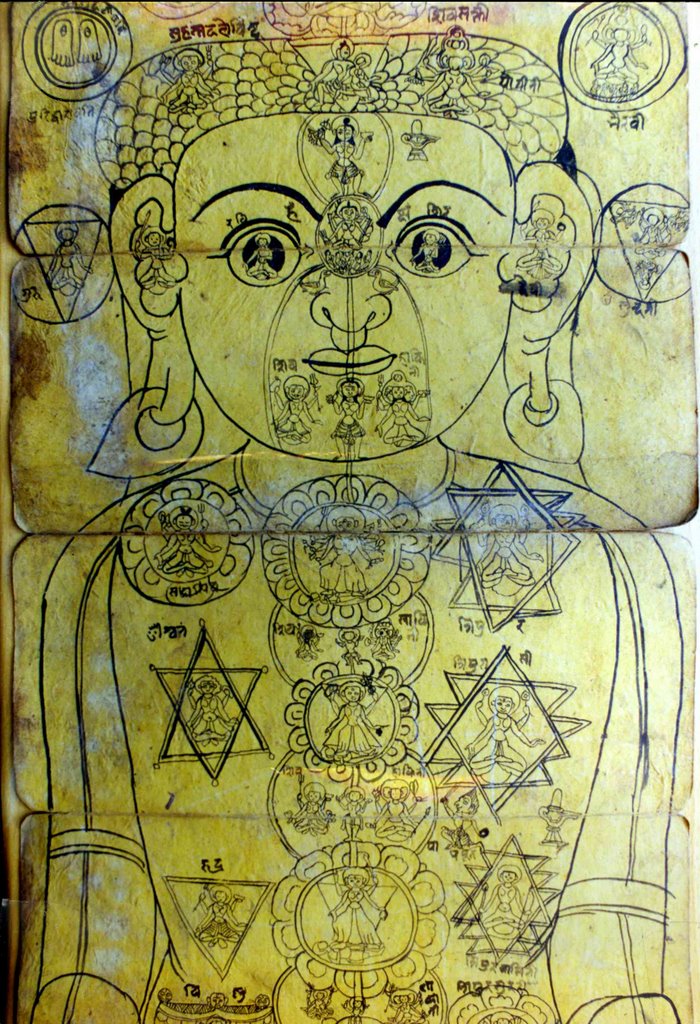
सूक्ष्मध्यानम् ॥ (sūkṣmadhyānam) Part 2


Here are scans of the second series contained in the same Nepalese concertina book mentioned in the previous post.

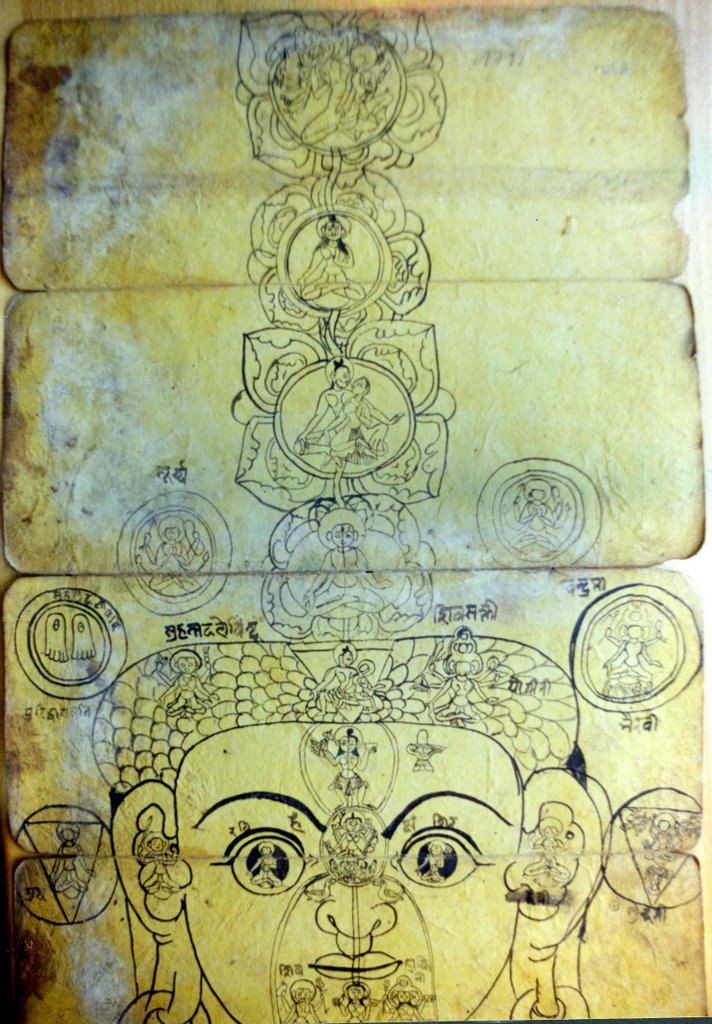
सूक्ष्मध्यानम् ॥ (sūkṣmadhyānam) Part 1

This interesting thyasaphu folding book (leporello) contains two elaborate depictions of the subtle body. I saw it in London with an art dealer and was allowed to make a few photographs for my research (apologies for the poor quality). The first one gives three series of cakras in parallel, including the āvaraṇas of the Śrīcakra ( the series on the right) .

This illustration of the subtle body is not particularly early: a very good source to consult for an early systematisation is
Netratantra 7 (the text has been recently dated by Alexis Sanderson to around 825 AD. More precisely to between 700 and 850 but with bias to the first quarter of the ninth cent. Appendix on the Provenance and Date of the Netratantra. Religion and the State: "Saiva Officiants in the Territory of the Brahmanical Royal Chaplain with an Indo-Iranian Journal 47 (2004), pp. 229--300.). This occurs in the context of an elaborate teaching of three methods of kālavañcanam (“cheating death”) .

The whole discussion spans three chapters of the text, 6.9–8.54ab. That there are three such methods is affirmed at 8.49–50b:

sarvakālaṃ tu kālasya vañcanaṃ kathitaṃ priye |
evaṃ tu trividhaṃ devi mayā te prakaṭīkṛtam ||
8.50 kālasya vañcanaṃ nāma yogaḥ paramadurlabhaḥ |
anenābhyāsayogena mṛtyujid bhavati naraḥ ||

The three methods of cheating death are thus:

1)
sthūla (=mantra ritual 6.9–50),
2)
sūkṣma (yogic 7.1–53, the section that teaches the subtle body),
3)
para (gnostic 8.1–54ab, =paropāya, =aṣṭāṅgayoga).

What makes
Netratantra 7.1–53 so valuable is the fact that it sets out an already fairly complex syncretic form of the subtle body teaching series of cakras, knots (granthi), voids (vyoman), dhāman (here the three “lights”), channels (nāḍi), winds (pavana), etc. Most significantly, it includes what must be one of the most lucid expositions of the subtle body according to the two prakriyās: the kulaprakriyā and tantraprakriyā. For example, concering the sixteen ādhāras we have the following two divergent lists provided by Kṣemarāja in his unpretentious commentary.

A) According to the
tantraprakriyā: aṅguṣṭha, gulpha, jānu, meḍhra, pāyu, kanda, nāḍi, jaṭhara, hṛt, kūrmanāḍī, kaṇṭha, tālu, bhrūmadhya, lalāṭa, brahmarandhra, dvādaśānta. These are fairly self-explanatory.

B) According to the
kulaprakriyā: kula below penis (meḍhrasyādhaḥ), viṣa in middle of penis (madhye), śākta base of penis (mūle), agni space of four digits above penis, ghaṭa in the fire-center and in the navel (pavanādhare) and below the navel, sarvakāma solar plexus to heart diaphragm (nābhihṛnmadhyamārge), saṃjīvanī in the heart lotus, kūrma chest (vakṣaḥsthala), lola in the mouth (gale), sudhādhāra above the lambhaka (lambhakasya…ūrdhve), saumya at its base (tasya mūlam āśritya), vidyākamala between eyebrows (bhrūmadhye), raudra palate (tālutalādhāra), cintāmaṇi =the crossroads (catuṣpatha), turya in cranial apperture, and as a seventeenth, the nāḍyādhāra (all pervasive).

I have recently trawled through secondary literature on the subject of the subtle body with some dismay. It is largely based on minuscule selections of texts often irrelevant to subsequent developments; this distorts matters quite unnecessarily. One word of caution (perhaps obvious): research by specialists of Religious Studies is usually unreliable as far as primary sources (especially MSS) are concerned.

Thursday, March 16, 2006

अहो वेदध्वनिः!

(नेपथ्ये सस्वरम्) मूषको वै प्रजापतिरासीत् । तस्य द्वौ दन्तावास्ताम् । दन्तेन दन्तेन बिलं करोति, भाण्डं स्फोटयति, हविष्यान्भक्षयति । यजमानः प्रहरति; चूचूशब्दं करोति । यजमानं स्वर्गं लोकं गमयति । य एवं वेद ...

प्रजापतिदेवः − (सादरं समाकर्ण्य) अहो! वेदध्वनिः!

“
(Offstage, with Vedic accent) Prajāpati assuredly was [once] a mouse. He had two teeth. Tooth by tooth he makes a hole, breaks the pot, devours the sacrificial offerings. The sacrificer strikes, he squeaks ‘choo-choo’. He conveys the sacrificer to the heavenly world. He who knows this…

Prajāpatideva: (listening respectfully) Ah, the sound of the Veda!”

From the Palāṇḍumaṇḍanaprahasana of Harijīvanamiśra (Palandumandana Prahasana of Harijivana Misra. Text Critically edited by Dr. V. Raghavan with Critical Introduction & English Translation. Golden Jubilee Publication. The Kuppuswami Sastri Research Institute. Madras–600 004. 1996), a farce about eating habits and dietary restrictions, particularly onions (palāṇḍu) and garlic (laśuna).

Here are a few additional references documenting this trepidation inspired by onions and garlic.

Manu bans them
(5.5 laśunaṃ gṛñjanaṃ caiva palāṇḍuṃ kavakāni ca | abhakṣyāṇi dvijātīnām amedhyaprabhavāni ca ||) Bhojadeva’s Śṛṅgāraprakāśa 9.26 (... dravyāṇi ayajñīyāni palāṇḍvādīni...) mentions them as unsuitable for sacrificial use, at Atharvavedapariśiṣṭa 36.7 they are used in black magic. In the Tantrālokaviveka ad 29.17 (the Kulayāga chapter) they occur in a list of 12 substances used in Kaula ritual: reto harāmbu puṣpaṃ ca kṣāraṃ nālājyakaṃ tathā | pauruṣaṃ kṣmābhavaṃ chāgaṃ mīnajaṃ śākunīyakam | palāṇḍuṃ laśunaṃ caiva dravyadvādaśakaṃ śubham ||.

Update 24th of March, 2006: Some further references to garlic and onions.

Tantrasadbhāvatantra 21.172:
vaṭakaiḥ pūrakair dhūpair āmamāṃsamanvitaiḥ /
naivedyaṃ dāpayet prājñaḥ palāṇḍuṃ laśunaṃ tathā //


Devīpaṇcaśatikā (Kālikākulapañcāśatikā) 3.80ab:
palāṇḍuṃ laśunaṃ caiva maṇḍūkān kṛśarāṃs tathā /

Somaśambhupaddhati 1.9.18 (bhojanavidhi):
katakaṃ madhuśigrū ca palāṇḍuṃ laśunāmiṣe /
gṛñjanaṃ hastadattaṃ ca lavaṇaṃ parivarjayet //


Vaikhānasagṛhyasūtra 27, Khaṇḍa 21: Sentence: 6 prasūte 'ntardaśāhe gokṣīraṃ sadaikaśaphoṣṭrastrīṇāṃ payaśca palāṇḍukavakalaśunagṛñjanaviḍjamanuktaṃ matsyamāṃsaṃ ca varjanīyam \7\

Brahmapurāṇa 220.174: halabhṛtyaṃ sarṣapaṃ ca palāṇḍuṃ laśunaṃ tyajet /
mānakandaṃ viṣakandaṃ vajrakandaṃ gadāsthikam //


Garuḍapurāṇa 1.96.72: palāṇḍulaśunādīni jagddhvā cāndrāyaṇaṃ caret /
śrāddhe devānpitṝnprārcya khādanmāṃsaṃ na doṣabhāk //


Kūrmapurāṇa 2,17.19: vṛntākaṃ nālikāśākaṃ kusumbhāśmantakaṃ tathā /
palāṇḍuṃ laśunaṃ śuktaṃ niryāsaṃ caiva varjayet //


Haribhaktivilāsa 8.158–159 (attrib. to Kūrmapurāṇa): athābhakṣyāṇi
kaurme
vṛntākaṃ jālikā-śākaṃ kusumbhāśmantakaṃ tathā |
palāṇḍuṃ laśunaṃ śuklam niryāsaṃ caiva varjayet //
gṛñjanaṃ kiṃśukaṃ caiva kukuṇḍaṃ ca tathaiva ca |
uḍumbaram alābuṃ ca jagdhvā patati vai dvijaḥ //


Śikṣāsamuccaya (line 1254):
māṃsāni ca palāṇḍūṃś* ca madyāni vividhāni ca |
gṛñjanaṃ* laśunaṃ* ca * eva yogī nityaṃ* vivarjayet ||


The early Buddhist Amoghapāśakalparāja: f.2v6: madyamāṃsapalāṇḍugṛñjanakālaśunasaṅkara*kṛtaṃ(?) *cocchiṣṭaṃ (em. T; cecchiṣṭaṃ MS) viśeṣārthinā *hy ete (em. T; hyaite MS) varjyāḥ.

Monday, March 6, 2006

पशुमर्दनम्, कौलगजमर्दनम् ॥ (Paśumardanam, Kaulagajamardanam)

It seems that I must be in possession of one of the only surviving copies (at least I fail to find it in library catalogues) of a lithograph print of a work called the Kaulagajamardanam (“the Crushing of the Kaula-elephant”) of Kṛṣṇānandayati (or Kṛṣṇānandācalayati), disciple of Kailāsācalayati, so I post scans of it here. As its title indicates, it is a fairly aggressive attack on what the author perceives to be the demonic religion of Kaulism, and even more specifically the “elephant” may be identified as Hariharānandanātha.

Like many other attempted heresiologies it seems quite poorly informed concerning actual Kaulism, and as such Kaula pratitioners cannot seriously have been its intended audience, rather Kṛṣṇānandayati presumably addresses his polemics to those he deemed in peril of becoming Kaulas. His efforts are a direct response to a work called the Paśumardana (“The Crushing of the Beasts”), by Hariharānandanātha. Here paśu “beast” is a Śaiva technical term for “non-initiates”. (I have not yet managed to get hold of this work, so I do not know if it is itself already a response to a specific “paśu”, but contrasting the two would make a fascinating and illuminating study of the religious climate in Vārāṇasī in the 1860s).

One of the main motives behind this work is of course “religious competition” and so
Kṛṣṇānandayati presents Hariharānandanātha as a bhraṣṭa- “fallen” anchorite in the following passage ...[mention of Manu scorning cat-like fake ascetics and heron-like fake ascetics fol. 6v]...etena

śaivadharmāśritāḥ kaulās tīrthabhūtāḥ śivātmakāḥ <|>
snehena śraddhayā premṇā pūjyā mānyāḥ parasparaṃ <||>
yathāśaktyā tu yatkiṃcid yo dadyāt kulayogine <|>
viśeṣatithiṣu prītyā tasya puṇyaṃ na varṇyate <||>
kulaniṣṭhān parityajya yac cānyasmai pradīyate <|>
niṣphalaṃ tad bhaved devi dātā ca narakaṃ vrajed <||>

ityādikān HARIHARĀNDANĀTHĀkhyena bhraṣṭānandanāthena kauleyakena Paśumardanānta upanyastān vākyābhāsān ālambya “vayaṃ saṃpūjyāḥ” iti pralapantaḥ kauleyakāḥ pratyuktāḥ...


Kṛṣṇānandayati refers to the following Tantric sources:

Uttaratantra, Merutantra, Rudrayāmala, Vaḍavānalatantra, Bhāvacūḍāmaṇi, Kāmākṣītantra, Kubjikātantra, Mahākālasaṃhitā, Bṛhattantrarāja, Niruttaratantra, “Kulāgama”, Nīlatantra, Kulāvalītantra, Mṛtyuñjayatantra, Kaulārcanacandrikā, Kulārcanatantra, Paśumardanākhyagrantha

He also refers to the
Bhagavadgītā, Kūrmapurāṇa, Vāsiṣṭhapurāṇa, Liṅgapurāṇā, Brahmavaivartapurāṇa, Skandapurāṇa,Pārāśarapurāṇa, Nibandhas on Dharmamīmāṃsā by Hemādri (=Caturvargacintāmaṇi) and Mādhava, Pūrvamīmāṃsā, Nigamakalpadruma, and the work of Hariharānandanāthabhāratī, and a Hindī commentary (bhāṣāvivaraṇa) thereon by his disciple Sukhānandanātha.

To give a flavour of
Kṛṣṇānandayati's style here is the opening section:

[fol.4v]śrīgaṇādhipataye namaḥ

natvā śrīgaṇanāthapādakamalaṃ pratyūhakakṣānalaṃ &
mārttaṇḍaṃ bhavameśapādayugalaṃ devyaṅghripadmāvalam |
labdhaṃ yat padasevanena sakalaṃ vedāntavācām phalaṃ &
taṃ kailāsapadādisaṃjñam acalaṃ saṃsmṛtya labdhvā balam ||1||

vipravrātavanāpaheṣu satataṃ varṇāśramālānakam &
bhaṅktvā madyamadena vāmamatitaḥ kaulākhyadurdantiṣu |
dharmasthāpakakāśikāpuravasadvidvadvariaḥ preritaḥ &
kṛṣṇānandayatiḥ karoti sudṛḍhaṃ śārdūlavikrīḍitam ||2||

he viprā dharmasetoḥ suvidhṛtividhaye brahmakarmaikahetor &
viṣṇor aṃśastha [-sya?] yūyaṃ naratanuvidhṛtivyājato lokapālāḥ |
yāce baddhāñjaliṃ vo dititanayanarair vāmibhir vīrakaulaiḥ &
saṅgaṃ tyaktvā vidūre śrutivihitasadācārarītiṃ bhajadhvam ||3||

viprāṇāṃ rakṣaṇārthāya & viduṣāṃ toṣahetave |
smṛtyāgamādibhiḥ kurve & duṣkaulagajamardanam ||4||

iha khalu dharmārthakāmamokṣeṣu caturvidhapuruṣārtheṣu mokṣa eva paramapuruṣārthaḥ | sa ca brahmajñānaikagamyaḥ, tam eva viditvātimṛtyum eti nanyāyaḥ panthā vidyate ’yanāyeti śruter brahmajñānaṃ ca dharmānuṣṭhānadagdhāntaḥkaraṇakaṣāyasyaiva puruṣottamasya bhavati |...

[colophon:] randhracaṃdrāṅke [']bde bhāvākhye vikramād gate āṣāḍhasitapakṣatyāṃ kāśikāyām idaṃ kṛtam 7 <||> iti śrīmatparamahaṃsaparivrājakācāryaśrīmatkailāsācalayativaryaśiṣyaśrīkṛṣṇānandācalanirmitaṃ kaulagajamardanaṃ samāptam || śā*yāgokulacandrasya śrīmannā lālaśarmaṇā || yatnān mudrāmayaṃ prāpiśilāvarṇaiḥ suśodhitaiḥ || mānamaṃdirasannidhau vārāṇasīsaṃskṛtayantrālaye kaulagajamarddanākhyo yaṃ grantho mudritaḥ saṃvat 1923 jyeṣṭhakṛṣṇaikādaśyāṃ samāptaḥ ||

Thursday, March 2, 2006

Some notes to the M.A. Stein collection of Skt. MSS in the Bodleian Library, Oxford, Part 4

These are all of the updates I have to the Clauson list for now (see: Clauson, Gerard L. M., Catalogue of the Stein Collection of Sanskrit MSS. from Kashmir. Journal of the Royal Asiatic Society. 587–627.). See also this by Gyula Wojtilla, he mentions three notebooks of MSS notes kept in the Library of the Hungarian Academy of Sciences (A 24)...
MS 118; Or.d.22(i)= ser. no. 50}
Rasamañjarī of Bhānudatta; bound in suede; Ff. 1–9; Ll. 18; akṣaras 45; Country paper; Small Jaina Nandināgarī; 25.2×11.3 cm; Inscribed area 8.7× 19 cm; Folios numered in lower right of the rectos: “1–6”; Dated saṃvat 1718 māghasudi day 2; rubrication of verse numbering, punctuation (marking granthas?) and left and right borders; central diamond-shaped ornamental space in the middle of the folios a few marginal corrections and annotations in Śāradā and Devanāgarī; Begins with a Jaina ornamental symbol (Check); Damaged edges of some folios have been repaired, occasionally this has obscured marginal annotation.

Maṅgala verses on cover: hālī nālī bāladīḥ pa ākṣyālaṃ gopālaḥ etāṃ vajharīṣyākaroḥ maṃkatabatu bīḍāla || 1|| hasyamāne pi hṛdaye mṛgākṣāmadanāgninā snehas tathaiva yat tasthau tadāścaryam ivābhavat || tasyāḥ māhitaṃsavībhiḥ parittāpopaśamāya yad yad aṃge avṛtapratikāralajjayeva kṣaṇato mlānim upaiti tannadasthāḥ // bibhraddakṣiṇa[hasta]padmayugale daṃtākṣasūtre śubhe vāme modakapūrṇapātraparabhūnāgopavītitridṛk śrīmānsiṃhayugāsanaḥ śrutiyuge śaṃkhau vahanmaulimāndiśyādīśvaraputra eṣa bhagavāṃl laṃbodaraḥ śarmanaḥ //

Incipit fol. 1r: ※||oṃ hrīṃ namaḥ|| ātmīyaṃ caraṇaṃ dadhātipurato nimnonnatāyāṃ bhuvi | svīyenaiva kareṇa karṣati taroḥ puṣpaṃ śramāśaṃkayā | talpe kiṃ ca ṃrgan vacā viracite nidrātibhāgair nijaiḥ|| raṃtaḥ premarasālasaḥ priyatamām aṃge dadhāno haraḥ ||1|| vidvatkulamanobhṛṅga|rasavyāsaṃgahetave| eṣā prakāśyate śrīma|dBānunā Rasamaṃjarī ||1||

Explicit fol. 9r: The text contioues into the (damaged) left margin where the colophon is added in red ink:… karī maṃjarī | 38 … śrīmadBhānuda … [tt]ena prakāśitā Ra … [samaṃ]jarī samāptim itā … saṃkhyā 460 || … [saṃva]t 1718 varṣe mā … [ghaśu]di 2 divase li … [khita]m idaṃ pustakaṃ | … [tr]ī pustake dṛṣṭaṃ | … śaṃ liṣittaṃ mayā … yadi śuddham aśuddhaṃ vā mama doṣo na dīyate |1|| leṣakapāṭhakayoḥ śubhaṃ bhavatuḥ || liṣitaṃ paropakārāyaḥ || śrīrastuḥ || kalyāṇam astuḥ || śubhaṃ bhavatuḥ || śrīḥ || chaḥ|| ||


***

MS 145; Or.d.22(ii)= ser. no. 51 Vāgbhaṭālaṅkāra of Vāgbhaṭa; bound in suede; Ff. 1–3; Ll. 17; Akṣaras 60; “Old paper”; Small Jaina Nandināgarī, on the first lines the scribe has utilised the additional space available to him by adding a horizontal flourish to medial i-ligatures. 24.7×10.9 cm; Inscribed area 8.5× 21.5 cm; Folio numering may have been present but is now lost as the folios have been “repaired” and cut; Rubrication of verse numbering, punctuation and left and right borders; Diamond-shaped ornamental space left of centre in the middle of the folios; a few marginal corrections and annotations in Śāradā and Devanāgarī; Begins with a Jaina ornamental symbol (Check); Damaged edges of some folios have been repaired, this has obscured som eof the marginal annotation; After the colophon on folio 3v are added sketches of a padmabandha and a chattrabandha.

Incipit fol. 1v: ※||śrīsarasvatyai namaḥ|| śriyaṃ diśatu vo devaḥ śrīnābheyajinaḥ sadā| mokṣamargaṃ satāṃ vrūte yad āgamapadāvalī |1 sādhuśabdārthasaṃdarbhaṃ guṇālaṃkārabhūṣitaṃ | sphuṭarītirasopetaṃ kāvyaṃ kurvvīta kīrttaye || 2 pratibhākaraṇaṃ tasya vyutpattis tu vibhūṣaṇaṃ | bhṛśotpattikṛd abhyāsa ityādikavisaṃkathā | 3

fol. 1r ends at pariccheda 2.26: vākyeṣv arthaṃ na badhnīyād viśiṣṭaṃ kāraṇaṃ vinā \mg{27} || praveśe caitrasya sphuṭakuṭajarājjī{\ill\ill\ill\ill\ill}caṃḍemā

fol. [2]v begins at 4.126: … tatas tataḥ || nirddhāryate yathāśakti tatsāram iti kathyate | 126

Explicit fol. 3v: doṣair ujjhitam āśritaṃ guṇagaṇaiś cetacamatkāriṇaṃ nānālaṅkṛtibhiḥ parītamatito rītyā sphuraṃtyā satāṃ || tauste… gataṃ navarāserākalpakālaṃ kaviḥ sraṣṭāro rocayaṃtu kāvyapuruṣaṃ sārasvatadhyāyinaḥ || 32 iti śrīVāgbhaṭālaṅkāre pañcamaḥ paricchedaḥ samāptaḥ || || cha|| śubhaṃ bhavatu || 5||

Scribbled Devanāgarī notes on fol. 3r: ×u×labhedasthūlasthūlā… sūkṣmasthūla 4 sūkṣma 5 sūkṣmasūkṣma 6 yi×ch[i]lāsaṃtaḥ svayam eva na saṃ[vātu]… sthūlā bhūparvvatādayaḥ 1 ye tu ×lāsaṃtaḥ tat kṣaṇe devasaṃdhānaisvayam eva samarthās te sthalā/ sarppis tailajalādayaḥ 2 ye tu hastenodā… nagaṃ tu aśakyās te sthalasūkṣmā chāmānapādaya 3 ye punar locanaviṣayā na bhavaṃti te sūkṣmasthūlā[ś ca]turiṃdriyaviṣayāḥ 4 ye ti kṣaṇādikarmmavargraṇāyogyās te sūkṣmā iṃdriya×××viṣayāḥ 5 ye cālpaṃtasūkṣmatvena karmmavargraṇātītās te sūkṣmasūkṣmā [va]rgraṇātītebhyo tyaṃtasūkṣmā dvy{u}aṇukaskaṃdhaparyaṃtā iti ×tātparyaṃ //6 puḍhavījalaṃvachāyācaturiṃdriyabisayakammapātugrākadā chabbheyāpogalā hoṃti/1// (+9 more lines legible but crossed out)


***

MS 81; Or.d.13(i); ser. no. 62 Nītipaddhati (=Darpadalana of Kṣemendra); bound in tooled red leather; ff. 20; ll. 26; akṣaras 23; 19th cent. laid paper; Śāradā; 24.8×20.4cm; inscribed area 11.7× 14.4cm; Complete; rubrication; folios numered in lower left of the rectos: “nī° pa° 1–19, lacunae marked with dashes; deletions with yellow gouache; Signed: “M.A.Stein”. Added note: “Manuskript r, enthält Kṣemendras Nītipaddhati und das Tantrākhyāyikha. Le[xische] I××tu sind g×××× und flüchtig unmittelbar ××× Ms. z kopiert.”

Incipit fol. 1v: oṃ śrīgaṇeśāya namaḥ || oṃ praśāntāśeṣavighnāya darpasarpāpamarṣaṇāt namaś ca sanidhānāya svaprakāśavikāsine saṃsāravyatirekāya hṛtotsekāya cetas{e}aḥ praśamāmṛtasekāya vivekāya namo namaḥ kṣemendra<ḥ> suhṛdāṃ prītyā darpadoṣacikitsakaḥ svāsthyāya kurute yatnaṃ madhurais sūktibheṣajaiḥ kulaṃ vittaṃ śrutaṃ rūpaṃ śauryaṃ dānaṃ tapas tathā prādhānyena manuṣyāṇāṃ saptaite mṛtyuhetavaḥ

Explicit fol. 20v: praśānto ntastṛṣṇāviṣamaparitāpaḥ śamajalair aśoṣas santoṣāmṛtavirasayānena vapuṣaḥ asaṅgas sambhogaḥ kamaladalakīlālakulayā bhavāraṇye puṃsāṃ parahitam udāraṃ mukhatamaḥ || iti nītipaddhatau tapovicāras samāptaḥ || 7|| sampūrṇo yaṃ nītipaddhatiḥ ||śubham|| ||


***

MS 87; Or.d.13(ii); ser. no. 117 Tantrākhyāyikā; bound in tooled red leather; ff. 20; ll. 26; akṣaras 23; “country paper”, some folios were repaired before use; Śāradā; 24.8×20.4cm; inscribed area 11.7× 14.4cm; Complete; rubrication; folios numered in lower left of the rectos: “ta° ntrā° pra° 20–73”, a gap of approximately 24 lines between at fol. 65; from fol. 70 onwards the text becomes increasingly fragmentary; lacunae marked with dashes; deletions with yellow gouache; This MS is a continuation of MS 81 by the same scribe Signed: “M.A.Stein”.

Incipit fol. 20r: oṃ namo vighnahartre oṃ namaḥ sarasvatyai || oṃ yatrāniśaṃ madhukarīva mahatī niṣaṇṇāyandavanasya madhuraḥ paramaṃ nidhānam tad brahmaṇas sakalamaṇḍalapuṇḍarīkaṃ pāyād anantavapuṣaḥ phaṇimaṇḍalaṃ vaḥ

fol. 21v: ata idam ārabhyate mitrabhedaṃ nāma prathamaṃ tantraṃ

Explicit fol. 73v: —navalokayan gardabhānām eva sakāśaṃ gataḥ—nā siṃhobhihitaḥ kiṃ tam eva lokaṃ prakrāmatha mi—nakramantatulyavyomamāka


***

MS 141; Or.d. 9(i); ser. no. xviii Laugākṣiśikṣā; bound in tooled red leather; ff. 47; ll. 8; akṣaras 12; “country paper”; Śāradā; 24.8×20.4cm; inscribed area 11.7× 14.4cm; Complete; Folios numered in lower left of the rectos: “lau° śi° 1–47”, Lacunae in the scribe's exemplar are marked with dashes, a large gap between folios 5r and 7v is present as a blank folio 6 with a few dashes; Begins with a verse listing the seven Kula mountains (=Mahābhārata Bhīṣmaparvan 6.10.10) and another the six darśanas.

Incipit fol. 1r: oṃ svasti śrīgaṇeśāya namaḥ // mahendro malayas sahyaś śuktimān vṛkṣaparvataḥ vindhyaś ca pāriyātraś ca saptaite kulaparvatāḥ / vedavaiṣṇavabauddhārhacchaivasauravibhedataḥ ṣaḍdarśanam iti khyātaṃ munibhir jñānakovidaiḥ || || oṃ svayambhuve namaskṛtvā brahmaṇe vedamūrtaye vedebhyo devatābhyaś ca mantrakṛdbhyas tathaiva ca ārṣaṃ cchando daivataṃ ca viniyogaṃ tathaiva ca pravakṣyāmy anupūrveṇa kṛtsnaṃ cārāyaṇīyake āyur yaśo dhanaṃ putrāḥ puṇyaṃ svargas tathaiva ca prāpyate sarvam etena yathāvad viditena tu / avidvān brāhmaṇaś caiva ṛtvigbhyo yājya eva ca / kuryāt kārayate yajñaṃ karmamātreṇa kevalam / cchandasāṃ yā tayā matvā pāpīyāñ jāyate tu saḥ /

Explicit fol. 47: avyahāreṇa vāyuḥ praṣemety etad vyavadhānād vyātyādiśeṣaḥ proktam ādiloposto jagmur upadhāyālope tv antālope gataṃ bhaved vai upadhādhikārirājeti yāmilupte kṣaratyacodvivarṇalopejyotir ādiviparyaye ca stokādyantaviparyaye gurvyā paryaughaḥpuruṣānadanāyety ekasmād dhecakānagarbham iti dvayor ekam / nāmavadākhyānaṃ vibhakṣyamaraṇā vibhaktiviparyayo hṛtsu ślokaiḥ || || udāharaṇaṃpañcamī || \ślo 27 samāptam iti || ||


***

MS 62; Or.d. 9(ii); ser. no. xvii Cāṇakyaśikṣā; bound in tooled red leather; ff. 99; ll. 8; akṣaras 12; “country paper”; Śāradā; 24.8×20.4cm; inscribed area 11.7× 14.4cm; Complete; Rubricated; Folios numered in lower left of the rectos: “cā° śi° 1–98”, Marginal additions.

Incipit fol. 1r: oṃ namaś sarasvatyai || oṃ atha ṛgvedāśrāye śākalyamatena sūtrapratīka-ṛksaṅkhyā-ṛṣidaivatacchandāṃsy anukramiṣyāmo yathopadeśaṃ <ca> nahyatejjñānamṛte śrautas sā tu karmaprasiddhir mantrāṇāṃ brahmaṇārṣeyacchandodaivavidyā<paṭha>nāpyāpanābhyāṃ

Explicit fol. 47: avyahāreṇa vāyuḥ praṣemety etad vyavadhānād vyātyādiśeṣaḥ proktam ādiloposto jagmur upadhāyālope tv antālope gataṃ bhaved vai upadhādhikārirājeti yāmilupte kṣaratyacodvivarṇalopejyotir ādiviparyaye ca stokādyantaviparyaye gurvyā paryaughaḥpuruṣānadanāyety ekasmād dhecakānagarbham iti dvayor ekam / nāmavadākhyānaṃ vibhakṣyamaraṇā vibhaktiviparyayo hṛtsu ślokaiḥ || || udāharaṇaṃpañcamī || \ślo 27 samāptam iti || ||